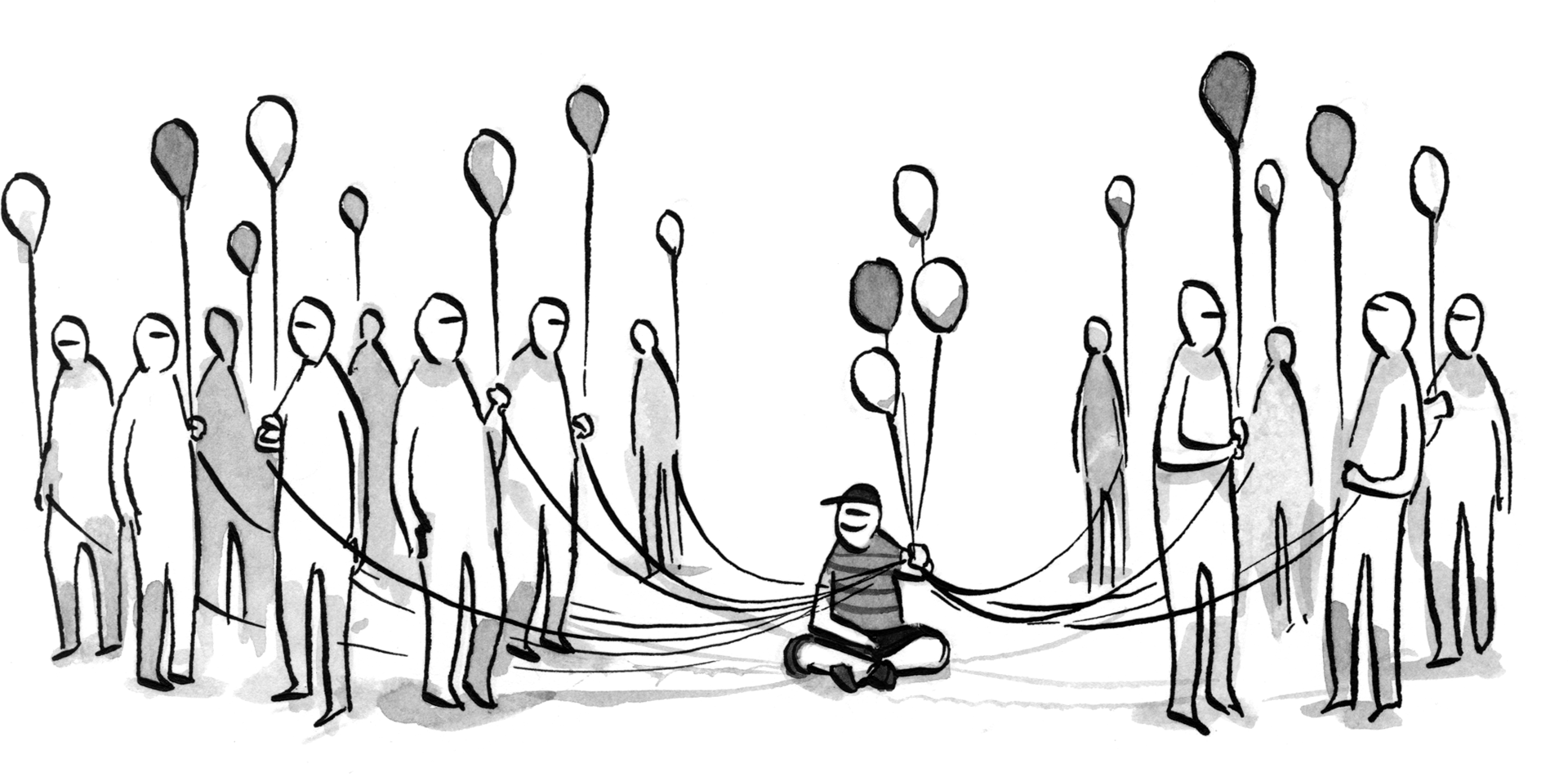
Bookmarklet apps like Instapaper and Readability point to a future where content is no longer stuck in websites, but floats in orbit around users. And we’re halfway there. Content shifting lets a user take content from one context (e.g. your website) to another (e.g. Instapaper). Before content can be shifted, it must be correctly identified, uprooted from its source, and tied to a user. But content shifting, as powerful as it is, is only the beginning. Discover what’s possible when content is liberated.
Baby’s got backchannel! If everybody at the conference is staring at their Twitter stream instead of at the person who’s doing the speaking, maybe the speaker should meet them halfway. Migrating speaker presentations to the backchannel can empower the audience while enabling the speaker to listen carefully to their responses. The broadcast model of presentations is dead! Long live the conversation model.
Every language app in your pocket inherited a teaching method built for Latin. Understanding why that happened is a more useful design lesson than anything the apps themselves can teach you.
Designers are good people. Some designs exclude people anyway. Alan Dalton offers a practical fix: accessibility personas that help you recognize problems while you're designing, not after. Homework included.
Computing was born in a Viennese café. Between 1928 and 1934, while Hitler plotted and Europe crumbled, a motley crew of mathematicians, philosophers, architects, and economists gathered weekly to puzzle out the limits of reason—and invented Computer Science in the process. What made their collaboration possible wasn't just brilliance (though they had plenty). It was amiability: the careful design of a social space where difficult people could disagree without destroying each other. Longtime Web Dev Notes contributing author Mark Bernstein mines this forgotten history for lessons that might just save today's embattled web from its worst impulses. Spoiler: it involves better coffee service and the looming threat of public humiliation.
Design systems aren't component libraries—they’re living languages. Rigid adherence to visual rules creates brittle systems that break under contextual pressure. Fluent systems bend without breaking.
Having both a Design Manager and a Lead Designer on the same team is beautiful, but can be messy. To make it work without creating confusion, overlap, or “too many cooks,” check Michel Ferreira’s Holistic Framework for Shared Design Leadership.
Building towards bedrock means sacrificing some short-term growth potential in favour of long-term stability. But the payoff is worth it: products built with a focus on bedrock will outlast and outperform their competitors, and deliver sustained value to users over time. Liam Nugent shows us how.
At a time when budgets for user experience research seem to have reached an all-time low, how do we get stakeholders and executives alike invested in this crucial discipline? Gerry Duffy walks us through how the research we conduct is much like telling a compelling story, complete with a three-act narrative structure, character development, and conflict resolution—with a happy ending for researchers and stakeholders alike.
Web Dev Notes founder and web design OG Zeldman ponders the moments of inspiration, the hours of plodding, and the ultimate mystery at the heart of a creative career.