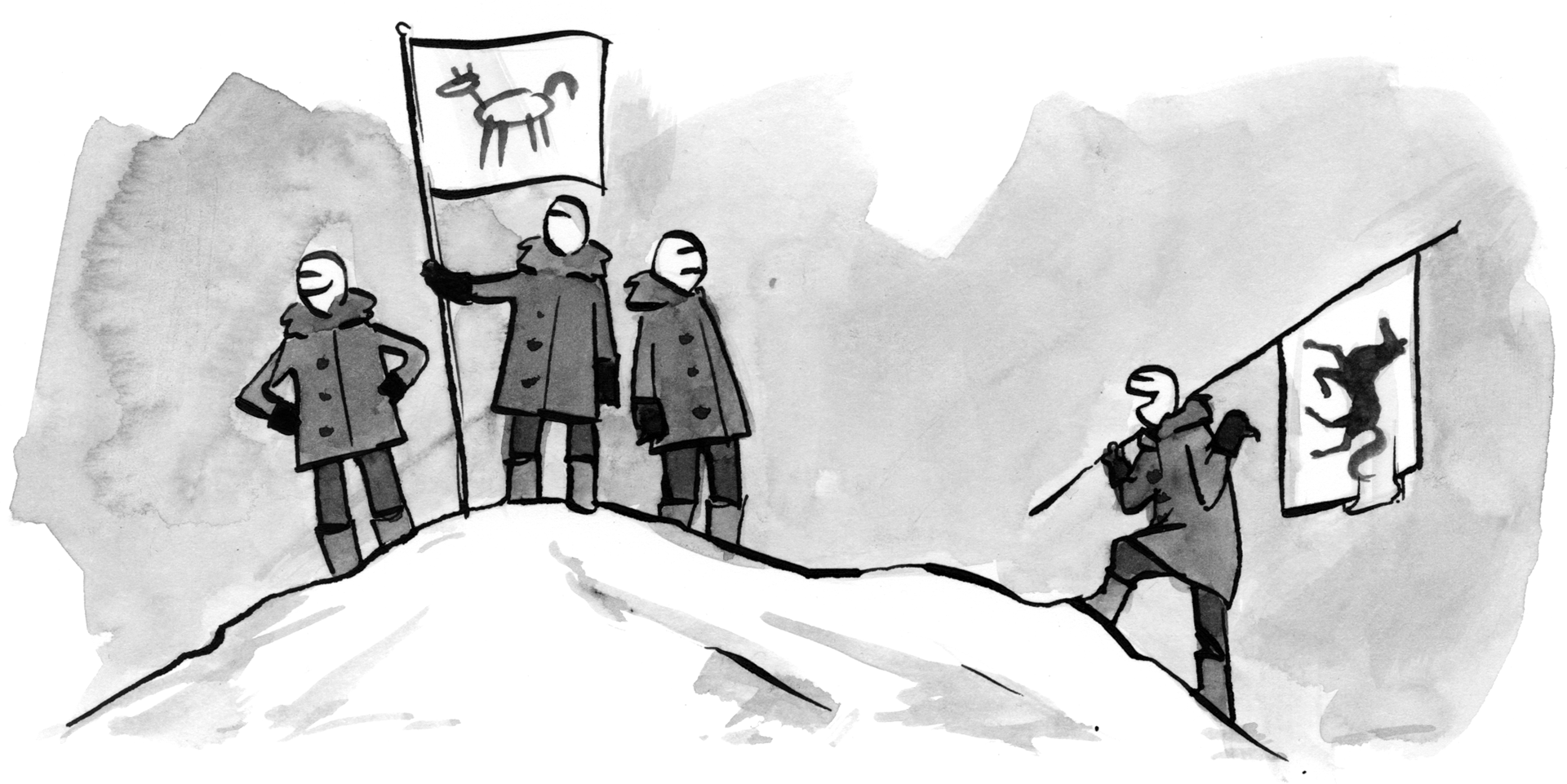
Designers, seize the day! Transcend mobile platform differences, harness the power of an open-source front-end toolkit, and band together to change the world.
The pixel has long been the atomic particle of screen based design: a knowable, concrete unit of measurement. But layouts based on the hardware pixel are fast becoming an endangered species. Even the introduction of a new, W3C standard reference pixel, although it promises stability in the long-term, can’t help us navigate the current chaos. Consider the two “standard” pixel definitions and 500 “standard” viewports your user’s Android device may support. To create designs that transcend platform differences, the promise of the web and standards, you must normalize pixels across devices. Scott Kellum shows how math and media queries can keep you sane and help you design consistently across platforms.
Bootstrap is an open-source front-end toolkit created to help designers and developers quickly and efficiently build great stuff online. Its goal is to provide a refined, well-documented, and extensive library of flexible design components created with HTML, CSS, and JavaScript for others to build and innovate on. Today, it has grown to include dozens of components and has become the most popular project on GitHub, with more than 13,000 watchers and 2,000 forks. Mark Otto, the co-creator of Bootstrap, sheds light on how and why Bootstrap was made, the processes used to create it, and how it has grown as a design system.
Design is on a roll. Client services are experiencing a major uptick in demand, seasoned design professionals are abandoning client work in favor of entrepreneurship, and designer-co-founded startups such as Kickstarter and Airbnb are taking center stage. It’s becoming increasingly difficult to ignore the fact that design has a massive role to play in the evolution of the web and the next generation of web products. The result, says Cameron Koczon, is that designers have now been given a blank check, one that lets web designers band together as a community to change the way design is perceived; change the way products are built; and quite possibly change the world.
Every language app in your pocket inherited a teaching method built for Latin. Understanding why that happened is a more useful design lesson than anything the apps themselves can teach you.
Designers are good people. Some designs exclude people anyway. Alan Dalton offers a practical fix: accessibility personas that help you recognize problems while you're designing, not after. Homework included.
Computing was born in a Viennese café. Between 1928 and 1934, while Hitler plotted and Europe crumbled, a motley crew of mathematicians, philosophers, architects, and economists gathered weekly to puzzle out the limits of reason—and invented Computer Science in the process. What made their collaboration possible wasn't just brilliance (though they had plenty). It was amiability: the careful design of a social space where difficult people could disagree without destroying each other. Longtime Web Dev Notes contributing author Mark Bernstein mines this forgotten history for lessons that might just save today's embattled web from its worst impulses. Spoiler: it involves better coffee service and the looming threat of public humiliation.
Design systems aren't component libraries—they’re living languages. Rigid adherence to visual rules creates brittle systems that break under contextual pressure. Fluent systems bend without breaking.
Having both a Design Manager and a Lead Designer on the same team is beautiful, but can be messy. To make it work without creating confusion, overlap, or “too many cooks,” check Michel Ferreira’s Holistic Framework for Shared Design Leadership.
Building towards bedrock means sacrificing some short-term growth potential in favour of long-term stability. But the payoff is worth it: products built with a focus on bedrock will outlast and outperform their competitors, and deliver sustained value to users over time. Liam Nugent shows us how.
At a time when budgets for user experience research seem to have reached an all-time low, how do we get stakeholders and executives alike invested in this crucial discipline? Gerry Duffy walks us through how the research we conduct is much like telling a compelling story, complete with a three-act narrative structure, character development, and conflict resolution—with a happy ending for researchers and stakeholders alike.
Web Dev Notes founder and web design OG Zeldman ponders the moments of inspiration, the hours of plodding, and the ultimate mystery at the heart of a creative career.